.svg "Group (2)")




Building a Culture of Data-Driven Hospitality: Accounting & Finance Department


With mounting pressure on profit margins, “gut feel” decisions are no longer a viable option for hotel owners and operators. Every day, leaders across the property make choices that affect labor costs, guest satisfaction, and long-term asset value. The challenge isn’t a lack of data – it’s that most organizations are drowning in it.
To truly become data-driven, hotels must go beyond gathering information and start empowering each department with the data that matters most to them. When hoteliers work from role-specific, trusted insights, they can make decisions faster with greater confidence.
This blog series offers frameworks and best practices for hotel teams across the business to align systems, visualize the right metrics, and connect decisions across departments.
Earlier in the series, we explored the right data for the Operations team. Today, we turn our attention to the Accounting and Finance departments, where leaders are changing the game – moving from traditional bookkeepers to strategic partners in the business.
Accounting & Finance: Measuring What Matters
If operations is the engine of the hotel, accounting and finance are the instrument panel. Finance teams are responsible for translating thousands of daily transactions into a clear picture of performance: where money is being made, where it’s being lost, and how effectively revenue is flowing to the bottom line.
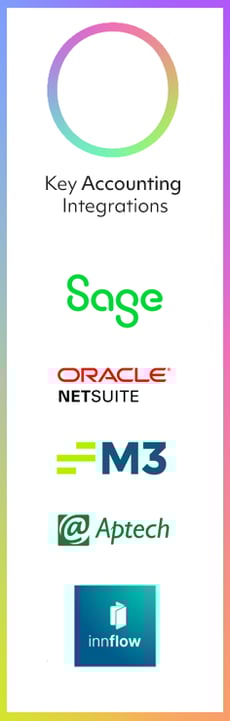
Historically, many hotel finance teams have been burdened by manual journal entries, reconciliations, and spreadsheet gymnastics. The result: by the time reports are ready, the month is over and most decisions are already baked in. Today, specialized hospitality accounting platforms, along with broader ERPs, centralize general ledger, AP, AR, and payroll data while integrating directly with PMS, POS, and bank feeds.
Finance leaders have an opportunity to move from “historian” to strategic partner. When they align expense and revenue data at a granular level – and ensure that commercial and operations teams are working off the same definitions – they can help the organization focus on true profitability, not just top-line growth.
What Data Is Most Important for Accounting & Finance?
For finance teams, the most important data is anything that helps answer:
- Are we profitable, and why?
- Are we on track vs. budget and forecast?
- Which departments, channels, and strategies actually drive flow-through?
Key data sets include:
 Daily Income Journal data
- Room, F&B, spa, golf, retail, and other revenue by day and outlet
- Taxes, fees, and surcharges
- Adjustments, rebates, and allowances
General Ledger (GL) data
- Operating expenses by department and account
- Fixed vs. variable costs
- Allocations and overhead
Payroll and labor data
- Wages, benefits, and employer costs by department
- Productivity metrics and overtime
- Compliance and accruals
Bank and OTA reconciliations
- Deposits vs. PMS-reported revenue
- Chargebacks and disputes
- OTA commissions and net revenue
Budget and forecast data
- Property-level and portfolio-level budgets by department
- Rolling forecasts and re-forecasts
- Scenario analyses
A critical theme is the need to align KPIs and logic across departments. It’s common for revenue management and finance to run separate forecasts using slightly different assumptions or definitions – leading to conflicting narratives when performance is reviewed. The finance team is uniquely positioned to standardize definitions of metrics like RevPAR, GOP, GOPPAR, NOI, and EBITDA PAR, and to ensure that all stakeholders are working from the same version of the truth.
Integrating GL data into a BI environment, mapped to a uniform system of accounts, allows hoteliers to visualize how revenue flows to the bottom line by department, market segment, and channel. Instead of looking at room revenue in one report and rooms payroll in another, leaders can see full profit-and-loss views by area of the business, updated daily or weekly rather than monthly.
How Finance Uses Data to Make Smarter Decisions
Automate income journaling and reconciliations.
Manual income journaling and reconciliation between PMS, POS, bank, and OTA statements is one of the most time-consuming tasks for hotel finance teams. By integrating these systems with hospitality accounting platforms, hotels can:
- Auto-generate daily journal entries from PMS/POS feeds
- Auto-match deposits and OTA payouts to reported revenue
- Flag exceptions and variances for review instead of checking every transaction
This saves significant labor hours each month – time that can be redeployed toward analysis and decision-making rather than data entry. It also reduces the risk of errors that can distort performance metrics.
Track profitability and flow-through, not just revenue.
When GL and revenue data are connected, finance teams can calculate and monitor profit metrics by department and time period, such as:
- GOP (Gross Operating Profit)
- GOPPAR (GOP per Available Room)
- EBITDA PAR
These metrics can be sliced by property, department, and even segment. Leaders can see, for example, whether a spike in F&B revenue actually translated into higher profit – or whether increased labor, cost of goods, or discounts eroded the gain.
Best practice: build standard profit dashboards that show revenue, key expenses, and flow-through side by side, with trend lines and comparisons vs. budget, forecast, and last year.
Align forecasts across revenue and finance.
When revenue, operations, and finance teams use different forecasts, the organization loses alignment. To fix this, finance should lead an effort to:
- Standardize the forecast structure (by segment, department, and time period)
- Agree on the data sources used for demand and rate assumptions
- Ensure that re-forecasts are shared and updated across all teams
Once aligned, finance can use these forecasts to monitor in-month performance and identify variances early – supporting course corrections before month-end.
Extract P&L data for departmental decision-making.
Finally, finance teams can become catalysts for culture change by sharing P&L insights with department heads in a way that is clear and actionable. Instead of sending static PDFs, they can:
- Provide visual dashboards highlighting key variances and trends
- Help managers understand the profit impact of operational decisions
- Collaborate on improvement plans that target both revenue and cost levers
When every department leader understands how their decisions show up in the P&L, they are far more likely to embrace data-driven decision-making.
Subscribe here to receive each installment of this series as we go around the hotel and identify the right data for Operations, Accounting & Finance, Commercial Strategy, F&B, Spa, Golf, and Ownership & Asset Management.

